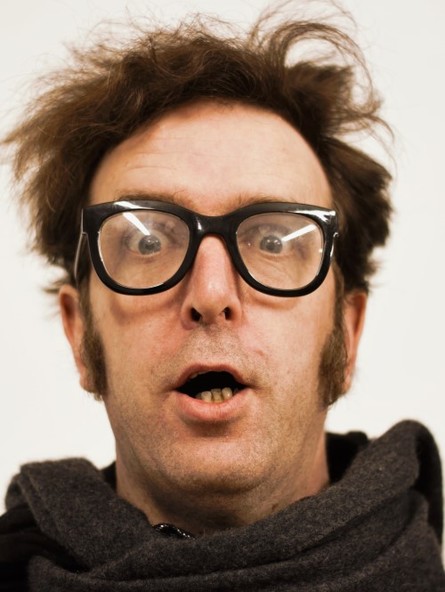
For more, go to EBowler or Like the Facebook page. Or follow him on Twitter. Or whatever.
The spice jars rattled when he slammed the door. Marjorie kept her head down. He hated it when she waited for him. She heard him dump his briefcase on the table. She shouldn’t turn around.
She turned around.
He just stared at her. He stared a decade of disappointment at her before sniffing loudly.
“What’s for dinner?”
She smiled. She should definitely smile. Pretend she didn’t know what was wrong.
“I thought we could go out.”
He yanked open the fridge door.
“I’m not going anywhere.” He took out a beer. “I’ve had a long day. I’m working the weekends inspecting booty. Is it too much to ask to have dinner ready when I get home?” He took out another three beers, shoving them under his arms, and he made for the den. “Call me when it’s ready.”
The spice jars rattled as he slammed the fridge door.
***
He’d been lying, of course. He hadn’t done any actual booty inspection in years. He had loved inspecting booty, but now he was lucky if he saw any booty in a month. It was mainly paperwork. And what was worse, he was a little behind.
He cracked a beer, and flipped the television on. Red carpet. Look at those fuckers. He balanced his beer on the arm of the chair, as he got out his latest booty assessments.
He didn’t regret it. He didn’t regret a single thing.
Yes, it had been hard splitting up the Funky Bunch, but the promotion was something he just couldn’t turn down. Most people had to wait years before they got made a Booty Administrator, Hector had been just 27. Most of the Bunch had understood. Marky had taken it the hardest.
“What the fuck, Hector? That doesn’t even rhyme!” Those were the last words Marky had said to him.
Not that he had cared. Those had been good years, fat years. Hector and Marjorie had lived high on the hog. Booty assessment had been a growing field in the 90s, and they had ridden the crest of the wave. But somewhere along the line, he had fallen down the crack.
He was still Funky.
“Shit!” Hector flapped at his trousers, as the beer glugged lazily into a pool on his lap. He rescued the papers and stood, dripping, brushing himself down.
Still red carpet. Who was wearing what. Or whom. Or some shit. Same every year.
The chair was only a little damp. He’d live.
He shouldn’t have shouted at Marjorie. It wasn’t her fault. The Booty Inspectors had never unionised. It had never seemed like they had to.
So when Hector had had that accident…
He was bumped upstairs to a desk job. Booty Supervisor. A room full of dead-eyed men who had once been something. Lords of all the surveyed. M-ass-ters of the Universe. Now all they did was shuffle booty between different filing cabinets. And not in a good way.
He looked up.
It was starting. He wouldn’t get too drunk this year. It wasn’t Marjorie’s fault.
The 84th Annual Academy Awards. There he was, grinning away in the fifth row. Marky fucking Mark. It was going to be a long night.
Sighing, he flipped his bifocals down off his forehead and opened the folder. Booty didn’t supervise itself, you know.
This whole article is a parody of this. If you haven’t read the horrible Rod Liddle piece, you probably won’t get this.
My New Year’s resolution for 2012 was to become a bigot.
Nothing too bigotty: a light moment of racism posing as ‘political incorrectness’ on national TV; working myself into a really frothing high dudgeon at the idea of the poor once a week; or that newly-invented bigotry: hatred of the disabled.
There’s lots of money to be made from being a bigot. If you can reliably work the readers of a tabloid into a lather with a mixture of baseless opinion and made-up statistics, the editors will literally chuck money at you until you can afford to go and live in Florida like Littlejohn.
And it is far easier to be a bigot than it ever was. It used to be thought of as bad form to cultivate outright hatred of the disabled. It was felt that you had an unfair advantage because they were, well, disabled. Nowadays, however, with the imprimatur of the government you no longer have to be ashamed about kicking people’s crutches away. After all, what are their crutches but a crutch? Thanks, Lib Dems!
And being a bigot is incredibly fashionable: from Clarkson to Littlejohn, from Jeremies Kyle through Vine, the airwaves are dominated by men in middle age who are desperate to find someone to blame for their thinning hair and thickening waistlines. Impotent? That will the fault of the gyppoes at Dale Farm! Sense of malaise at having done nothing with your life? It’s probably the fault of the spendthrift Labour government. With every follicle that closes our moral certainty increases.
The world is shit. And it’s everyone else’s fault.
And who can blame us? Not you lot. Every time we find a new scapegoat, you all get to put the boot in, too. As long as we cultivate an air of national nastiness, in which there’s no problem that can’t be solved by puking hot bile at it, you can all vent your frustrations, too. Just realised that the mortgage payment will bounce? That’s the fault of a feral youth.
The latest figures about bigotry came out this week. They suggest that 50% of those writing deliberately provocative, ill-informed, poorly-constructed opinion pieces in the tabloids are actually fit for proper work. Some of us don’t believe a word of what we’ve been paid to say, and yet we churn it out, day after tedious day. Some have been doing it for more than a decade.
But when you suggest that these people are nothing more than loathsome pondslime you get accused of victimising the mentally infirm.
Well, I’m not. I’m victimising the morally infirm.
Or at least, I’m trying to. But it will probably go in one ear and out of the other. Like the imaginary bullets Melanie Phillips dreams of firing into the heads of gay Islamicists from the BBC.
The Right-wingers will say, hey you fat old fag-enabler, more money is spent on Jobseekers’ Allowance than is spent on maintaining out eight or nine top bigoted columnists. To which I say: not by much.
But that doesn’t make being an awful, twisted bigot; a festering, crapulent, pustule of a person, who has a picture in the attic of someone who gave up long ago and hanged themselves in despair; a monstrous toad who fell into a bucket full of wet lips okay, does it?
That’s like saying we shouldn’t get worked up about people being cautioned by the police for the common assault of a pregnant woman because murder is much worse.
It’s a silly argument.
More than anything, though, those posing as bigots just to get their tabloid-assured moment in the sun, and the odd appearance on Celebrity Come Dine With Me are doing a disservice to those who really need our help: the actual bigots. Rather than directing our expressions of concern, and warmth, and facts to those who could really use them, we end up shouting at Rod Liddle. So nobody wins. Except Rod Liddle.
It has been easier to pose as a bigot ever since tabloids started espousing positions through their own self-interest that would previously only have been held by unspeakable turds: in favour of torture, against human rights, in favour of turning our backs on refugees, the idea that disabled people are disabled through some fault of their own, demonisation of the poor.
I think we should all pretend to be bigots for a month, and… No, hang on. That’s a horrible idea. A stupid idea.
Let’s not, eh? Let’s really not. Instead, let’s not be bigots at all for a while. The next time you hear the news, or the government, or a neighbour saying something that is clearly intended just to get you blaming someone else for your problems, why don’t we all have a cup of tea? Or a sit down? Or a ponder of the ways in which we’re culpable for making other people’s lives miserable.
Tell you what, let’s all pretend not to be bigots for a month. Or a year? Who knows, we might discover we’re not actually bigots after all…
Sir Ian Bowler tell you how it is. And where it is. And what it is.
This is an occasional series, the Comedy Book Reviews, in which I’ll look at various books and tell you how useful I think they are to the budding comedy writer, or writer-performer.
Full Disclosure: A review copy of this book was sent to me by the publisher. I didn’t spend my own money on it. I’ll leave you to decide how corrupted I may have been by that.
Secrets to Writing Great Comedy (Teach Yourself)
I’m a big fan of the Teach Yourself series. Almost a decade ago it was Ray Frensham’s Teach Yourself Screenwriting that helped me put together my first scripts, and started me on the path to my current – for want of a better word – career. I also learned to ask for beer in Danish from one of them, something that proved almost invaluable on one long weekend in Copenhagen in 2003. I’ve even got an unbroached copy of Teach Yourself Pitman Shorthand somewhere, in readiness for the day when I am reduced to offering outdated skills to faceless corporations for a living.
Just to be clear right from the off: this book will not give you the secrets of writing great comedy. In fact, I doubt anyone knows the secret of great comedy. Those people who have managed to write great comedy have only done it for short periods of time. I don’t think that those great comedians who have produced less than great work simply forgot the lessons of this book; but that great comedy is a mercurial, ephemeral thing that sometimes eludes even the most talented comedy writers. After all, even Richard Curtis wrote Blackadder: Back and Forth.
However, what this book will give you is a good grounding in many different comic modes and styles. It covers all of the basics, and, if you are new to comedy writing, it should help you in all sorts of ways. It’s not an innovative work, but it is packed with good, solid advice.
In many ways, it’s a good British answer to Gene Perret’s The New Comedy Writing Step By Step, which works up from writing gags to sketches to sitcoms. The exercises are useful, all could really help you tune comic ideas, and are more interesting than the writing of 101 Tom Swifties (as Gene Perret suggests). Seriously. I did that exercise. I now have 101 jokes I can never use.
All of the writing advice is sound, and useful, but the book is a little broad. Someone who wants to write great standup does not need the same skills as someone who wants to write a great sitcom, or a great sketch. As a short, helpful introduction to all of these disciplines, packed with facts and exercises, this book is hugely successful. Unfortunately, there are books which deal with each of these things in greater detail.
I would advise any new comedy writer to have a look at this book. There’s a lot of writing wisdom, a lot of helpful information, and a good introduction to many forms of comedy writing in there.
It doesn’t deal with anything in much depth, however. If you’re looking for how to string A and B plots, and act beats through a sitcom script, this isn’t the book you’ll need. If you want information about writing sketches for the web (probably the fastest growing area in comedy), this isn’t the book you’ll need. If you’re looking for information about where you can put your standup or character piece on, this isn’t the book you’ll need. This is the book you’ll need when you’re surveying the comedy world, wanting to write something, anything, but aren’t sure where to start.
It’s a good book, great value for the amount of information it packs in. It might not give you the secrets of great comedy, but it could do something more important. It could give you the skills to get your first comedy, possibly terrible comedy, up on stages in front of people. The Secrets To Writing Terrible Comedy. Because that’s what you’ve got to do. And that, of course, is the first step towards writing great comedy…
Two years ago we released the first of the In The Gloaming podcasts, for Hallowe’en 2009. Our original plan was to make six. We got to four. (If you want a list of some of the many things we did wrong, I wrote a long post-mortem here. In fact, if you’re podcasting it is full of useful Dos and Donts. Mainly Donts.)
However, I got to work making half-hour horror comedies with some incredibly talented people. The casts included: Ruth Bratt, Michael Greco, Lizzie Roper, John Voce, John Hopkins, Zoe S Battley, Darren Strange, Sally Chattawa, Emma Powell, and Rachel Stubbings). I got to make one of those people wail “But these are my Beppe shoes!”
Anyway, because nothing is never truly dead on the Internet, and because it’s Hallowe’en, why not download one (or four), and have a creepy, funny Samhain? The Archive with all of the episodes is here. And then tell your friends.
In fact, don’t even bother to do that. Just click down there and start listening right now. Just click. DO what the creepy man says and click. What could possibly go wrong? After all, it’s Hallowe’en…
In The Gloaming may be a corpse, but it’s an animated one.
Sort of.
(Oh, I also have a short story in this month’s issue of Black Static, Britain’s foremost horror magazine, available at all good newsagents. End plug.)
John Rose Battley was never a well man. As a conscientious objector in the First World War, he was sentenced to work in a market garden. On a cold day in February, whilst he was putting 2,000 cauliflowers under cloches, he noticed that his toes were turning black. Despite having never been to the trenches, John Battley was getting trench foot.
With his brother, he started his own printing firm in 1897, working out of a room above their father’s shop. He built the business up, it survived his brother leaving, its proprietor not being able to work at it during the First World War, the Great Depression and at least one extended nervous breakdown, which lasted many months in 1933. That printing firm, although its name has changed, is still around today.
Battley was in his 50s by the time he married in 1933, and that seemed to redouble his activity. He was already an active member of his church and local choir, a leading light of the Temperance Society and the Rotary Club, and in 1938 he was elected to the London County Council, as a Labour member for Clapham.
During the war he worked on the Housing Committee on the LCC, even as his own house was bombed in the V1 attacks. In 1945 he stood for parliament, and became the first ever Labour MP for Clapham. He wasn’t a vocal MP. Although he made notes, he never made a speech in the House of Commons, but he was an ardent worker on behalf of his constituents. He voted with the government most of the time, the only exception being the National Service Act. 30 years after his pacifism had forced him to give up his business, he still believed that no Christian should ever have to (or, indeed, could) perform military service, and so he rebelled against the government once, in 1947.
Whilst he was an MP he also stayed on as a member of the LCC, an active Rotarian, church member, choir member, and managing director of his own business. By 1950 the stresses had got the better of him, and he did not stand for re-election. Indeed, he had another breakdown shortly thereafter, and stayed in a hospital until he died in 1952.
Without knowing it, on 5th July 1948 this quiet, dedicated man saved the life of his grand-daughter and great grand-daughter, neither of whom he was ever to meet.
By voting for the National Health Act, John Battley made sure that when, almost 60 years later, 29 hours into labour, his great grand-daughter – my daughter – Eleanor decided to get into severe distress as she tried to enter the world sideways, her life was saved. Both she and Zoe, Zoe Battley, received the instant care of two paediatricians, two midwives, and at least three nurses (I lost count, I was busy worrying, and wondering if I could sneak out with the gas and air canister).
Over the 34 hours that labour took we had (I say we, Zoe selfishly used most of the drugs herself): heart monitors, midwives, gas and air, an epidural, a room to ourselves, three trips to the maternity ward (three painful trips home), a ventouse (don’t ask), synthetic hormones that accelerate contractions, pethedine for slowing contractions right down. And in between all of the worry about how much pain my wife was in, whether or not I’d packed any of the right things, whether I was going to be a good dad, or, as things got more serious, whether I was going to get to be one at all, the one thing I never had to worry about was how much the whole thing was going to cost. As a self-employed comedian of variable success, I didn’t have to worry whether or not I could afford the things and people that kept my wife an child alive.
Some people, of course, will argue that this presents a moral hazard. If I am never aware of the costs of treatment, I won’t behave in a way that avoids unnecessary treatments; that health care free at the point of delivery encourages poor decision-making. What that means in this situation I’m not sure I understand. Perhaps I should have impregnated my wife with a more sensible-sperm, which would have seen the birth canal as an opportunity for emerging normally rather than doing somersaults. Perhaps I should have severed the nerves in Zoe’s spinal cord myself as the contractions started, because epidurals don’t grow on trees. Perhaps I should have had to choose which of the two, my wife or my daughter, we could actually afford to treat. Perhaps that would have taught me not to be so feckless. Doesn’t take more than a funeral or two before people start making better life choices, right?
62% of bankruptcies in the USA are down to health care bills. People lose their houses because they get ill. And they aren’t uninsured people. 78% of those people had insurance. Insurance that didn’t, actually, insure them in any meaningful way at all.
It will confuse some people, I know, that someone so vehemently anti-government, a left-libertarian, someone who some days – whisper it – is probably an anarchist should have gone onto a bridge to defend a monopolistic state health provider. Those people are confused as to what Andrew Lansley’s Health & Social Care Bill is. The choice isn’t between a state provider and a free market. The choice is between a state provider of health run for the general welfare of the people it serves, or a state monopoly provider of health that is run to best produce profits for private healthcare companies. It would be bizarre to bemoan politicians plundering the public purse, but to cheer when corporations do it.
I’m not saying Andrew Lansley is a shill for private healthcare companies. That’s his wife’s job. I’m not saying that the £21,000 he received from John Nash, chairman of Care UK and founder of Sovereign Capital which owns several private healthcare companies would have in any way influenced his opinions on the issue of whether private companies should be able to profit at the expense of the NHS. I’m not saying it. But he is. In a speech in 2005, he said: “Demanding uniformity will negate the benefits of competition. How can competition work, whether on prices or quality, if it does not lead to variation and divergent outcomes?” Or, in other words, different people will get different levels of treatment under the NHS, otherwise competition would not work. His vision is an ideological one in which ‘competition’, rather than the needs of patients, is paramount.
And this isn’t a move towards a free market, or towards real competition. It is simply a move that allows private companies to cherry-pick profitable services. Services that are already provided. There is no guarantee that they will provide them better (the responsibility for the Health Service is to be turned over to a quango who are not answerable to Parliament, so out politicans can’t be to blame for however bad it gets in the future), the only guarantee is that money that once would have flowed through the NHS will now flow to shareholders in private health companies. Because ‘competition’ is the aim, not patient welfare.
This is pure kleptocracy. Assets that have been built with the public purse, maintained at the taxpayers’ expense, are to be auctioned off. And what’s worse, private health care companies aren’t even going to have to act like, you know, businesses to get in on the act. They won’t be competing in any meaningful sense, under the umbrella of the NHS, they will simply be pocketing our cash without having to guarantee standards in the way the NHS currently does.
The fact that the local health authority sees no conflict of interest for the practice in Yorkshire that recently started charging for minor skin surgeries highlights the bizarre situations that we must nod through in the name of ‘competition’. The fact that the same GPs at the same surgery will be in charge of deciding if funds are spent on a procedure, and in charge of performing the same procedure privately if they decide it isn’t is outrageous. That’s a moral hazard. You can tell, because it contains a moral element. Eating too many chips is not.
And don’t let them tell you these are cuts. That we need to make these cuts. This plan makes the NHS more expensive. It will cost £1.2 billion more to implement these changes than to not do it, and there are no cost savings at the other end. So we will end up with a service closer to France’s or America’s in that it will cost much more than the one we have at the moment.
And what is so clearly, arse-breakingly frustrating about the whole thing is that it received any Lib Dem support at all in the House of Commons. It’s like they don’t remember the clause in the Coalition Agreement, the line in the sand which, if crossed, would lead to the dissolution of the Coalition, the one about “no more top down reorganisations of the NHS”. Of course, by the time the policy documents for the Coalition emerged a couple of weeks later it was hedged with many qualifiers. The Lib Dems cannot have any serious claim to be a restraining influence on the Tories if they roll over at the disembowelling of one of the nation’s most loved institutions.
And fuck the Labour Party, too. A supine, spineless, useless thin drizzle of urine that leaks down your face and calls itself champagne. Without the NHS reforms of 2000 and 2008, this Bill would have been impossible. As it is, it is only an extension of the ‘competition’ ethos introduced into the NHS by none other than Tony Blair. You remember, it was when he was telling us that anyone who objected was a ‘force of conservatism’ and that he had ‘no reverse gear’. Vehicles without reverse gears are terrible vehicles, Tony. Most people buy ones which have reverse gears. (Oh, and equally, George Osborne, Plan Bs are a good thing. Doing contingency planning is just sensible, yes? God, I hate them all…)
The ground was prepared for all of this by the Labour Party. They put the ideological argument for it years ago. Some might rail against this now, but what are they doing about it? Sally Bercow accidentally ended up at #blockthebridge because she was having a walk with her children. I saw John McDonnell there, but no other Labour MPs. They are a disgrace, and I’d suggest that they hang their tiny heads in shame, although it’s quite clear they have none.
And so I was proud to stand on that bridge. Proud to stand between what used to be the LCC building, and the Houses of Parliament. Proud to stand with a couple of thousand people in front of St Thomas Hospital, where Zoe was born. Proud to speak to, and on behalf of people who believed in a better future.
So, it’s too late to lobby your MP now. It’s too late to have come down on Sunday (you missed Josie Long, Mark Thomas, Nick Revell, Chris Coltrane, Tiernan Douieb, Grace Petrie, Lisa Egan and Nadia Kamil. You are a fool.) It’s too late to adopt a peer, although you could try faxing them something this morning. In a few hours we will know one way or another, whether or not John Battley’s printing business will outlast the greatest achievement of the 1945 Labour government.
The one thing you could do, right now, stop reading and do it, is to sign this petition. 115,000 people did it yesterday, but it’s not enough. Sign it, send it to your friends, tweet about it, talk about it on Facebook, argue with Tories about it (not that I’ve met a single real-life Tory who thinks it’s a good idea). For these last few hours, write and jump up and down and do whatever you can to make a noise about this. The only thing that might sway the crossbench lords (and don’t think I don’t find it utterly galling to have to go grovelling to someone who earned their place in the legislature by popping out of the right mimsy) is if they are left in no doubt that hundreds of thousands, millions of people are angry, worried, dismayed by this.
John Rose Battley was never a well man, but he left behind him something to take care of us all. Let’s do our bit to take care of it for the next couple of hours.
Yesterday, Sir Ian Bowler went to see the rabble on Westminster Bridge who were attempting to ‘save the NHS’. He likes to think he changed a few minds. And sexualities.